
E-mail:
Doctor of Science, Institute of crystallography, and Laboratory of IOT (integrated optics technology), University of Cologne, Germany.
Master Degree, Institute of crystal materials (national key laboratory of crystal materials), Shandong University , P. R. China.
Diploma of experiment physics, Department of Physics, Shandong University, P. R. China.
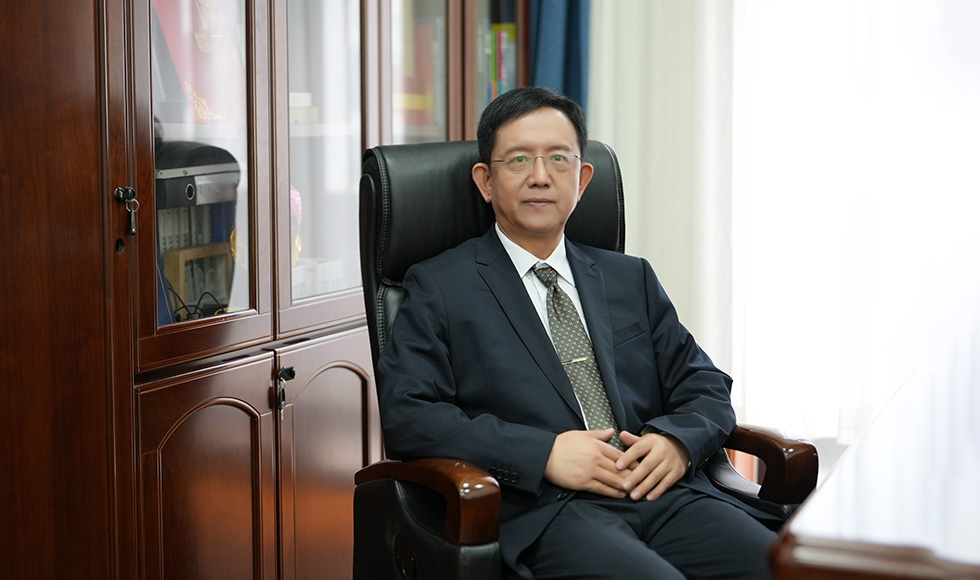
Director of the Center for Brain-Inspired Computing, Tsinghua University
Director of centre for brain inspired computing research, director of optical memory national engineering research centre, department of precision instrument depart, Tsinghua University, P.R. China.
Data Storage Institute (DSI), Agency for Science, Technology and Research (A*STAR), Singapore:Lab Director of Artificial Cognitive Memory, Optical Materials & Systems, Non-Volatile Memory and Optical Media Labs; Principal Research Engineer, Senior Research Engineer; Scientist I/II/III.
City University of Hong Kong, Photonics Center, Hong Kong, Postdoctor
Fraunhofer Institute for Applied Optics and Precision Engineering IOF, Germany, Postdoctor
Shandong University, national key laboratory of crystal materials, Lecturer
Shandong University, Research Assistant
The Center for Brain Inspired Computing Research (CBICR) at Tsinghua University was founded in September 2014, with Professor Shi Luping serving as its director. Committed to breaking through key technologies of brain-inspired intelligence and advancing artificial general intelligence, the center is jointly established by seven schools, departments and research institutes within Tsinghua University. It integrates interdisciplinary disciplines including brain science, electronics, microelectronics, computer science, automation, materials science and precision instruments.
Huang, H., Niu, T., Yang, R., & Shi, L.*(2025). RAM2C: A Liberal Arts Educational Chatbot based on Retrieval-augmented Multi-role Multi-expert Collaboration. In Proceedings of the 31st International Conference on Computational Linguistics (pp. 448-458).
Shi, L., Cong, Y., & Zhang, W. (2025). Dual Driven Approaches for General-Purpose Brain Inspired Computing. In 2025 9th IEEE Electron Devices Technology & Manufacturing Conference (EDTM) (pp. 01-03).

 Home
Home Teacher login